
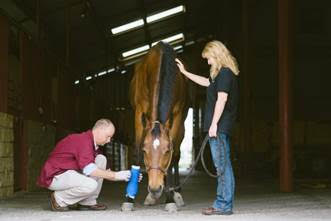

At some point, almost every horse owner ends up wrapping a leg.
Maybe it’s after a hard workout. Maybe you’re trying to reduce swelling after an injury. Or maybe you’re protecting a wound while it heals. Whatever the reason, leg bandages are a common part of horse care.
The challenge is that a poorly applied bandage can sometimes create as many problems as it solves.
That’s why understanding the basics of when, why, and how to bandage is just as important as having the supplies on hand.
Start by Asking: Does This Horse Need a Bandage?
It’s easy to assume every scrape, bump, or swollen leg needs wrapping, but that isn’t always the case.
Bandages are commonly used to:
- Support tendons and ligaments during recovery
- Help manage swelling
- Protect wounds from contamination
- Provide protection from impact or interference injuries
Before reaching for the wrap, it’s worth taking a moment to assess what you’re trying to accomplish. And if you’re dealing with a significant injury or aren’t sure what’s appropriate, a call to your veterinarian is always a good idea.
Preparation Makes a Difference
One of the biggest keys to successful bandaging happens before the first layer goes on.
The leg should be as clean and dry as possible. Dirt, moisture, bedding, and debris trapped beneath a wrap can irritate the skin and interfere with healing.
I’ve seen horse owners spend a lot of time applying a careful bandage only to realize afterward they wrapped over mud or damp hair. Taking a few extra minutes to prepare the leg properly is usually worth it.
Consistency Is Everything
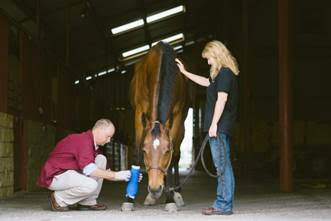
When it comes to bandaging, even pressure matters.
Too loose and the wrap may slip.
Too tight and it can create pressure points or even damage underlying tissues.
The goal is firm, even support from top to bottom.
A few helpful reminders:
- Keep padding smooth and wrinkle-free
- Overlap each layer evenly
- Avoid bunching or folds
- Apply consistent tension throughout the wrap
- Check that the finished bandage looks neat and balanced
A well-applied bandage should support the leg without creating new problems.
Safety Comes First
Not every horse appreciates having its legs wrapped.
Some tolerate it quietly. Others make their opinions known immediately.
When applying a bandage, it’s generally safest to stay in a crouched position rather than sitting or kneeling on the ground. That way you can move quickly if the horse becomes uncomfortable or reacts unexpectedly.
This is especially important when working around hind legs.
Even calm horses can surprise you when they’re injured or sensitive.
Practice Before You Need It
Like many horsemanship skills, bandaging becomes easier with practice.
The worst time to learn how to apply a leg wrap is during an emergency when your horse is injured and emotions are running high.
Ask your veterinarian to demonstrate proper techniques, practice under supervision, and become comfortable with the process before you actually need it.
Because when an injury does happen—and eventually most horses find a way to collect a few bumps and scrapes—you’ll be much more confident knowing you can provide the support your horse needs.
Originally published at https://www.coloradohorsesource.com/equine-leg-bandaging/

News from the horse industry. Sharing today’s information as it happens. The Colorado Horse Source is not responsible for the content of 3rd party submissions.