
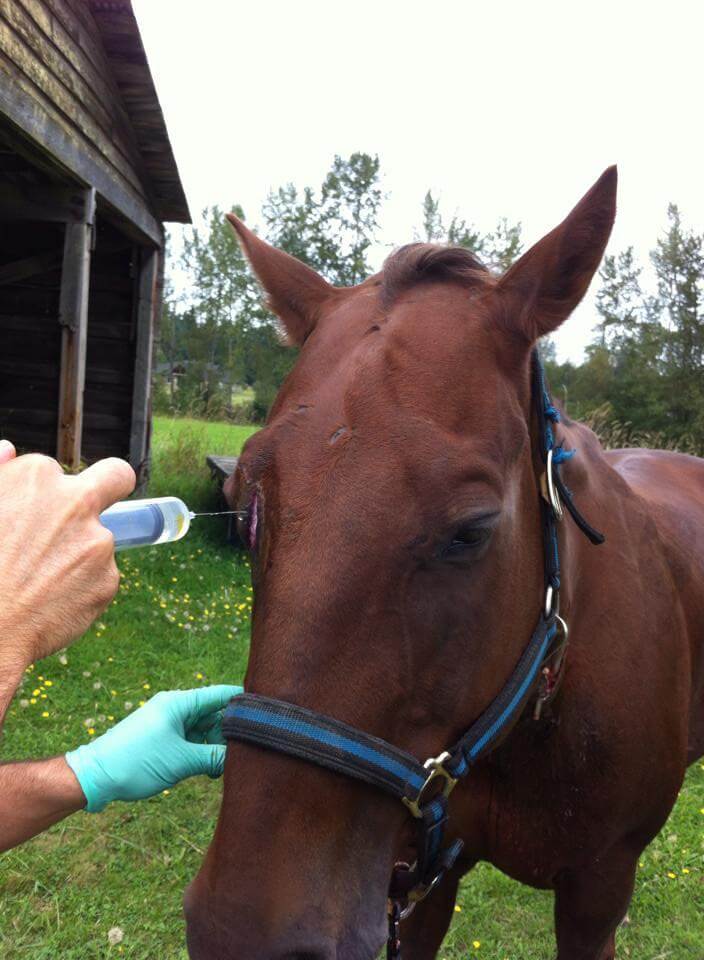
If horses have one special talent, it’s finding creative ways to injure themselves.
A small scrape can appear overnight. A minor cut can turn out to be deeper than it first looks. And sometimes a horse comes in from turnout with a wound that leaves you wondering exactly what happened while no one was watching.
The good news is that many wounds heal very well when they’re recognized early and cared for properly. The key is knowing when a wound is minor, when veterinary attention is needed, and how to support the healing process from the beginning.
Take Steps to Ensure Proper Healing
By: Eleanor Blazer
Horse owners joke about wrapping horses in bubble-wrap to protect them from injury. Unfortunately, we can’t, so we have to deal with the resulting wound when our beloved steeds do damage to themselves. Before slathering, spraying and daubing on the many wound treatments available, several steps must be taken.
The first step is to recognize there is a problem. Knowing what is normal for each horse and frequent observation are keys to keeping horses healthy. The sooner the wound is found the better chance it has of healing without complications.
The next step is assessing the wound. To perform this step, the horse must be restrained and the wound examined. Care must be taken that you don’t get hurt while inspecting the injured horse.
During the assessment period the wound may need to be cleaned to aid inspection. Hosing the area with cool water works best for this, but do not hit the wound directly with a high-pressure stream of water. High pressure could drive dirt or other foreign material deeper into the wound, and it will be painful to the horse. Direct the water above the wound and let it run downward over the wound. Anything embedded which cannot be rinsed away with the water should be left for your veterinarian to remove.
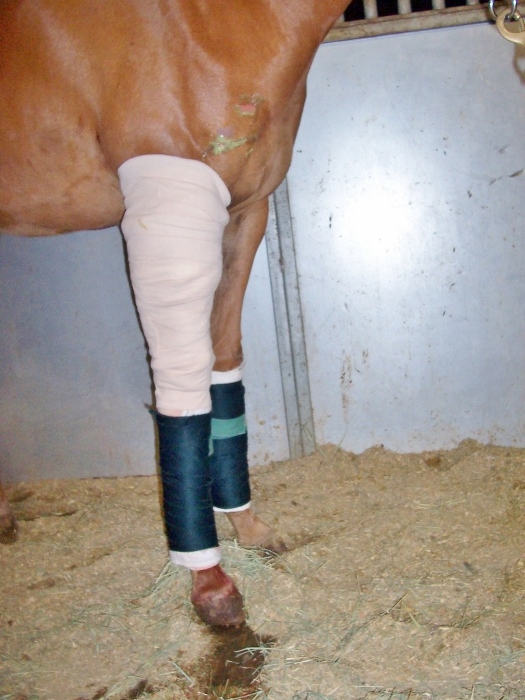
There are basically two types of wounds: superficial wounds and deep lacerations. Superficial wounds are abrasions which may be as minor as hair loss, to a laceration that penetrates the first few layers of skin resulting in the appearance of blood and serum. Some lacerations may require a veterinarian to suture the area. Suturing should be done within six hours of the initial injury.
Deep lacerations penetrate through the skin, the fat and into the underlying structures, and may involve muscles, tendons, ligaments and bone. A veterinarian must be contacted, the horse kept quiet and the wound stabilized until the vet arrives. The horse’s tetanus immunization status will need to be reviewed.
After assessing the wound and contacting the veterinarian if needed, any bleeding must be controlled. Light bleeding from a superficial wound can be stopped by applying pressure with a clean lint-free material or gauze pad for three to five minutes. If blood vessels are involved, the bleeding can be stopped by applying pressure for five minutes. If the bleeding resumes when pressure is removed, apply pressure for another five minutes with new material to soak up the blood.
Bleeding that continues and quickly soaks the material may be a damaged artery. Pressure must be kept on the wound until the veterinarian arrives. Do not apply a tourniquet unless the veterinarian advises it and walks you through the steps.
Next, the treatment phase begins. Follow the veterinarian’s instructions on caring for deep lacerations or wounds that required sutures.
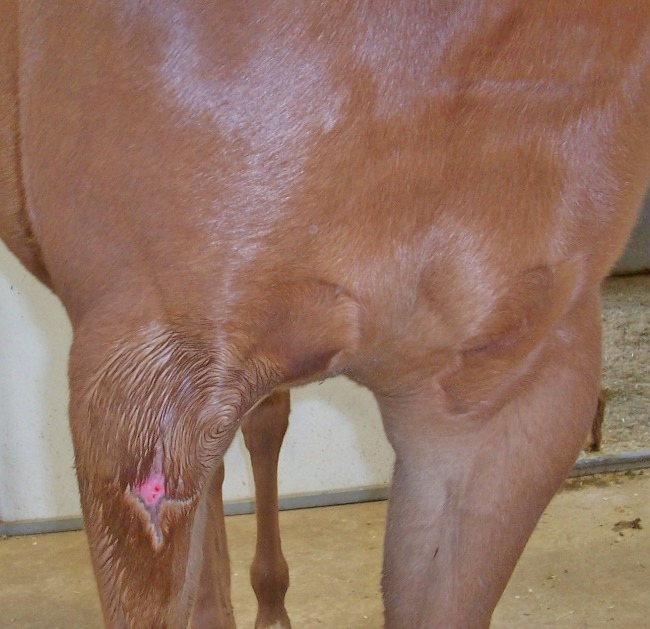
Most superficial abrasions and minor lacerations can be cared for by the horse’s caregiver If the wound has not been cleaned, hose the area as described previously. A second gentle cleaning with Betadine or hexachlorophene by using lint-free material or a gauze pad will help kill any bacteria that were introduced into the wound. After rinsing and allowing the area to dry, a sterile pad can be applied to the area and fastened in place.
It is not necessary to apply antibiotic ointment if the area has been cleaned and bandaged. If the wound is in a location that cannot be bandaged, an ointment or spray will help protect it.
Due to their large size and reactive nature, our equine friends tend to be accident-prone. For these reasons, observation and immediate care of wounds is imperative. Keep your first aid kit well supplied and your veterinarian’s phone number at the top of your favorites list. As the Boy Scouts say, be prepared!
Take the online course “Horse Health and Disease” taught by Dr. Jack Sales. Earn certification or work toward a Bachelor of Science degree in Equine Studies. Go to www.horsecoursesonline.com for more information.
THE WAY OF HORSES
By Eleanor Blazer
Copyright @ 2016
Originally published at https://www.coloradohorsesource.com/equine-wound-care/

Eleanor Blazer was raised training and caring for horses. She learned to ride and care for the horses her family bought and sold. Many of these horses required improved nutrition when they arrived for training. Eleanor’s experience and research has benefited both horses and horse lovers in the field of equine nutrition. An equine nutrition consultant, based in Bulverde, Texas, she keeps busy doing equine nutrition consultations, conducting seminars, and speaking to youth groups about horse care and nutrition. Eleanor is the author of the syndicated column The Way of Horses. She has more than 20 years experience helping and being a mentor to those wanting to know how to provide the very best care and nutrition for our special friend – the horse.