
Good training doesn’t always mean teaching the fanciest maneuver or the most complicated trick. Before a horse can become a confident trail partner, a reliable ranch horse, or a successful show horse, he needs a solid foundation of basic skills—and those basics are worth revisiting throughout his life.
Knowing when to stay with an approach, when to change course, and how to work with each horse’s individual personality can make a big difference in training. Some horses are naturally light and responsive, while others need more time and patience to develop the same feel and willingness.
In this installment of Ask Al, master horseman Al Dunning answers questions about the fundamentals he believes every horse should know, how long those skills really take to develop, and how patience, consistency, and respect shape a well-trained horse.
The 5 Basics Every Horse Should Know
by Al Dunning
Question: When training a horse to do a particular task, how long will you continue to use a certain approach if it doesn’t appear to be working?
Answer: Horses learn from repetition—good or bad. If you are using proven techniques, many times you should stick to them until the horse catches on rather than changing or adding more pressure. If you add additional approaches to supplement your current direction, you can get further confusion and/or actually increase the learning curve. Horses all learn at different rates so patience is key to positive training.
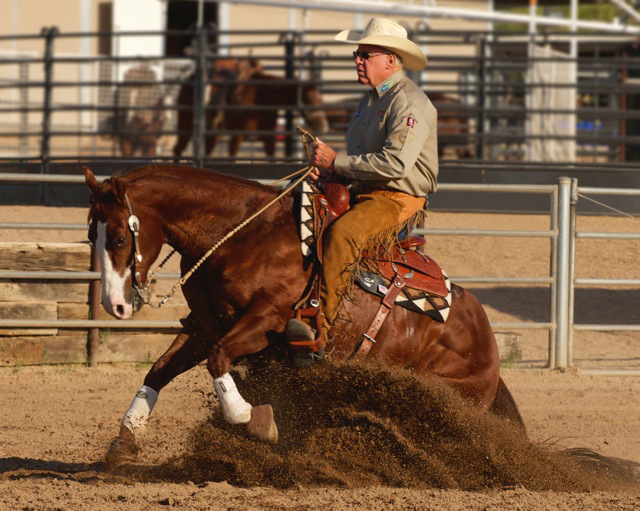
Question: What fundamental basics do you train all your horses? What are the first things you train?
Answer: The first thing I teach is to go forward. From there I can continue to progress into the 5 Basics that all well trained horses should have. These are: Go forward readily; turn freely right and left; stop; back easily and collect by listening to leg cues, rounding up and being light.
Question: How long should it take, approximately, for the average horse to learn the 5 Basics?
Answer: The 5 Basics are important components for any horse to learn, know and also maintain. With this in mind, I am always working on them as there are many degrees to each component, from beginner to advanced. I think about each one when I warm-up/tune-up my horse. So, I guess my answer is that I am always teaching or maintaining all or one of the 5. Insert al basics
Question: Do you believe that it is easier to successfully train a lazier, slower horse or a more sensitive, faster horse?
Answer: A horse with feel and sensitivity is much easier to train than a dull, lethargic animal. They respect you more, learn quicker and will perform more maneuvers than one that is lazy. Not unlike humans!
Question: Do you spend a lot of time desensitizing a young horse? Conversely, how easy is it to sensitize one that is dull or lazy?
Answer: Again, it is easier to train a light, sensitive, horse that has “feel” than a dull, lethargic individual. It is easier to train a horse that is willing to learn, than a horse that has been taught to have defense mechanisms due to wrong/improper handling. In the case of the latter, you must start over with the basics and get the horse’s trust and proper respect before moving forward again.
A dull, pushy horse must first regain a sense of who is running the show. Doing some ground work and creating a safe space between you and your horse is critical in this situation. Getting the horse to approach you and go away, at your command, is the goal. This process will include developing trust, respect, attention to commands and understanding personal space.
When you are talking about sensitizing a dull horse, it goes back to the overall attitude of compliance to requests. Work on the basics and go at a pace that suits your particular horse. I like using the end of my reins or a crop rather than a spur to encourage proper performance. With all horses, logical, methodical training, tailored to the individual, will always produce the best results.

Al Dunning of Scottsdale, Arizona, is one of the most respected horsemen in the industry. Al and his students have garnered 48 world and reserve world championships. He has held numerous national leadership positions and earned multiple honors including induction into the AzQHA Hall of Fame. His 50+ years of experience as a professional trainer has led him to produce books, DVDs, clinics, Team AD online mentoring, and AD Tack, selling all the tack he uses as well as his books and videos. Al’s ability to reach people comes from his love of horses and out of respect to the mentors in his own life. For more information, visit https://www.aldunning.com or www.aldunningsadtack.com.