
Once a rescue horse is healthy, settled, and comfortable in his new surroundings, the next chapter begins. This is where the relationship between horse and human really starts to take shape. Building trust takes time, especially when you don’t know exactly what a horse has experienced before coming to you.
It’s tempting to make up for a horse’s difficult past with extra affection or rush into training because you’re eager to see progress. But a rescue horse still needs the same things every horse needs: clear boundaries, consistency, patience, and a handler he can trust to make good decisions.
In Part 3 of this series, Allison Trimble shares how she approaches the early stages of training, from reading a horse’s personality and establishing respect on the ground to building confidence through simple, deliberate handling. The goal isn’t to erase a horse’s past, but to help him become a willing and dependable partner for the future.
Part 3: Building a Bond and Training
by Allison Trimble
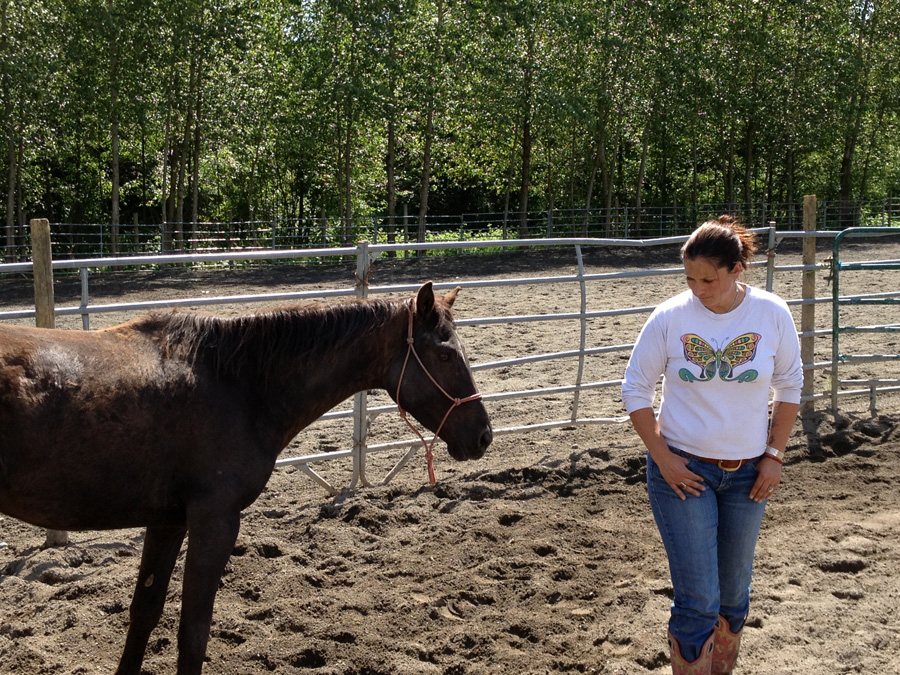
The best way to prevent a horse from becoming slaughter bound is for him to be usable. Though we are unable to guarantee our own security, we are able to give a horse the ability to be desirable to another home if ever our circumstances change. A horse does not need to be a champion, but he does need to be well mannered and safe to ride. If he excels in a particular discipline, that is a bonus, but our goal is to rebuild a horse that is a great partner.
I mentioned last time that until a horse has a complete return to health, it is not advised to begin heavy working. However, after the horse has settled in to his new surroundings, it is important to start building a bond in ways that don’t work against weight gain. Always approach the situation as if this is a wild horse that has had no handling. It is unlikely that any accurate knowledge about the horse is known so always err on the side of safety.
During the settling in period, watch the horse carefully. Observe his reactions to decide whether he is primarily dominant, or primarily timid. Just as in colt starting, this will make a difference in how the horse is handled. The goal is always a willing partner, but timid and dominant horses require differences in handling. The dominant horse must be shown his place in the pecking order (below the human) and the timid horse must be shown that following the human’s lead is safe (not knowing what kind of human experience has occurred). Regular handling while the horse is returning to health—haltering, leading, etc.—can go a long way toward building a trusting bond.
Typically, I start the training process in a round pen, but I would avoid over exertion unless completely necessary to accomplish haltering. Working on the end of a 12 ft lead with a good halter breaking program is a good activity. I also would focus on the join-up process and having the horse learn to read my body language, both on and off a lead. Slow, deliberate, consistent handling helps give the horse confidence. As in colt starting, the goal is not to expose the horse to every situation and scenario. It is to build a horse that, regardless of the situation or scenario, willingly follows the horseman’s direction. During this period remember that the concept of pressure and release is paramount in the training process, and it begins on the ground. Teach the horse to respect personal space and to yield to pressure, however it is presented.
I see many mistakes on the ground that set a bad precedent for riding. One of the biggest mistakes I see, especially in an emotional rescue situation, is improper affection toward the horse. I have a simple rule: I can touch a horse at any time, on any part of their body, but the horse may never initiate contact with me. Why? The one initiating the contact is the leader. Scratching a forehead can be good, or bad. It depends on who initiated the connection.
With good ground training, by the time the horse is ready to start under saddle he will have a respect for boundaries, an introduction to pressure and release and a bond with a human. He is now ready to move forward in a training program like any unbroke colt. At this point I want to emphasize removing the “story” from the horse. One of the most brilliant things about horses is their ability to live in the moment. As a prey animal, survival is always the first priority. Once that need is met, and there is some sort of routine to count on, horses have an uncanny knack for forgetting the past. As humans, we tend to hang on to the story and this can work against the goal of a solid partner. Is this to say that all forms of trauma always melt away? No. But if the horse is approached as though he had no sad story, it will be clear if there are additional issues that must be addressed. Some traumas cannot be healed, but I have found that to be the exception. Most horses, if given a new situation, take to it quite readily. Civilization was built by the horse/human relationship, not because of tremendous horsemanship, but because the horse is a marvelous and highly adaptable creature.
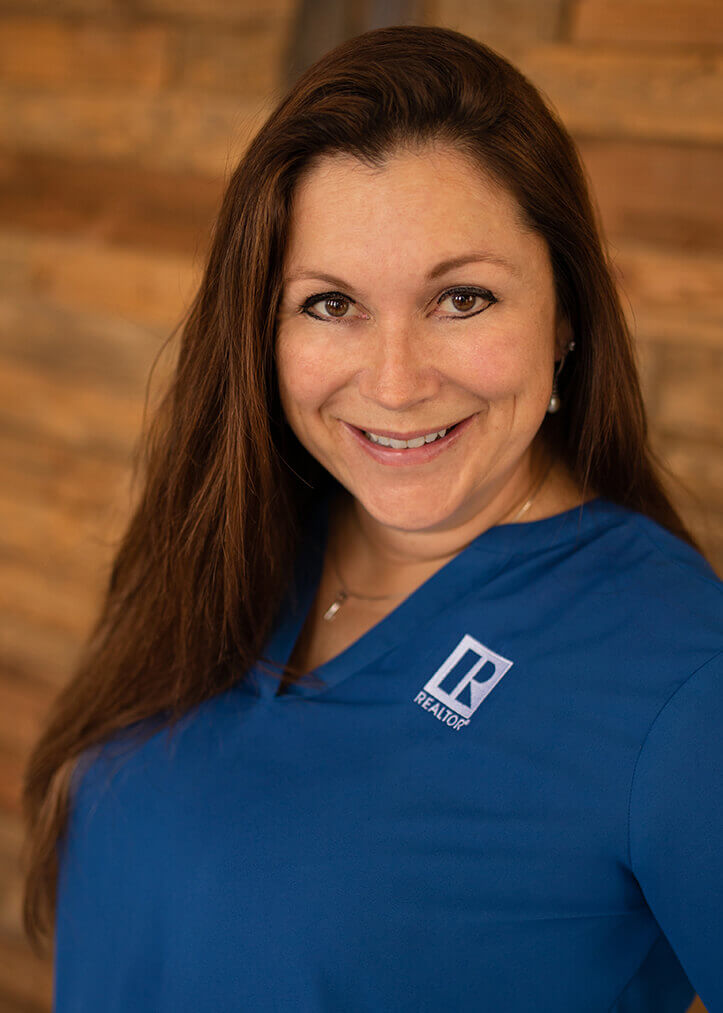
Allison Trimble is a Realtor® specializing in equestrian properties, farm and ranch properties, and residential real estate. She’s a former horse trainer, and a current owner, breeder, and non-pro competitor in cow horse and reining events. For many years, Allison wrote a monthly column for The Northwest Horse Source.
Learn more at www.allisonblakerealestate.com