
Dear Colorado horse community,
The Colorado State Veterinarian’s Office is monitoring an outbreak of Equine Herpes Virus (EHV) / Equine Herpes Myeloencephalopathy (EHM) associated with barrel racing and rodeo-type events in Texas and Oklahoma between November 5–9. Several cases, including equine deaths, have been confirmed in those states.
At this time, there are no confirmed cases of EHV/EHM in Colorado. The Colorado Department of Agriculture (CDA) is coordinating with the affected states and will notify Colorado horse owners directly if any traced exposures are identified.
For Horse Owners:
• If your horses traveled to Texas, Oklahoma, or other events where EHV exposure may have occurred, please contact the Colorado Department of Agriculture at 303-869-9130 for guidance.
• Exposed horses should be isolated for 21 days after the last known exposure.
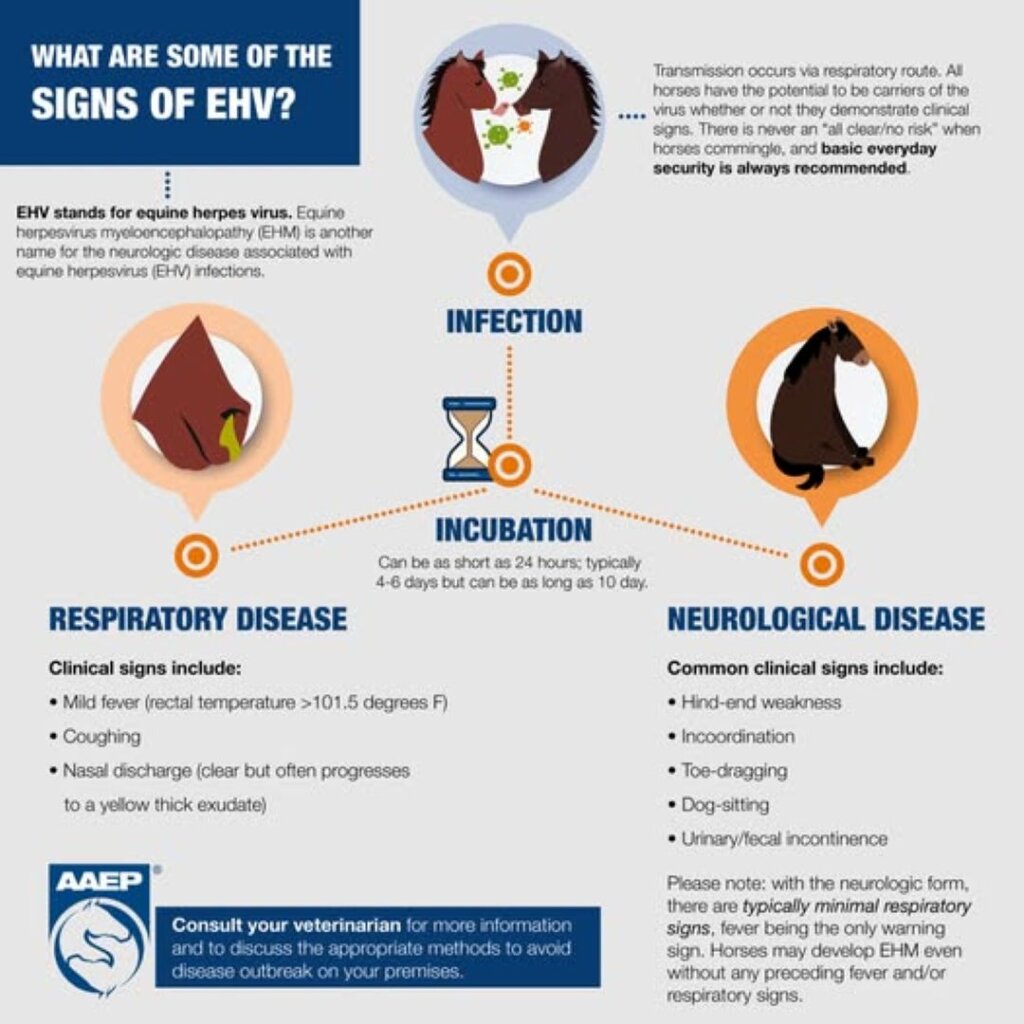
• Monitor exposed horses twice daily for:
– Elevated temperature (above 101.5°F)
– Respiratory signs (nasal discharge, coughing)
– Neurologic symptoms (difficulty walking, inability to stand, lethargy, urine dribbling)
• Keep a temperature and symptom log and contact your veterinarian immediately if any signs appear.
For Event Organizers:
• Consult with your veterinarian about the risks of hosting equine events during this multi-state outbreak.
• In some situations, postponement or cancellation of events may be appropriate to help limit disease spread.
• If events proceed, we recommend short-timed health certificates (within 72 hours) and enhanced on-site biosecurity practices.
For Veterinarians:
• If you have a horse with acute neurologic signs, please contact the Colorado Department of Agriculture at 303-869-9130. After hours, the voicemail will direct you to the veterinarian on call.
• Paired samples, including nasal swab and whole blood, are critical for accurate diagnosis, as viral shedding and viremia may vary.
Biosecurity Reminder:
EHV-1 can spread through nasal secretions, aerosol droplets, contaminated surfaces (stalls, water, feed, tack, trailers), and by people via contaminated hands and clothing. Good biosecurity practices are essential:
• Clean and disinfect equipment and surfaces that come into contact with horses.
• Avoid sharing buckets, tack, and grooming tools between horses.
• Use protective clothing and practice hand hygiene when working with multiple horses.
Source: Colorado Department of Agriculture, State Veterinarian’s Office
Thank you for your dedication to protecting equine health in Colorado.
Sincerely,
Colorado Horse Council


News from the horse industry. Sharing today’s information as it happens. The Colorado Horse Source is not responsible for the content of 3rd party submissions.