
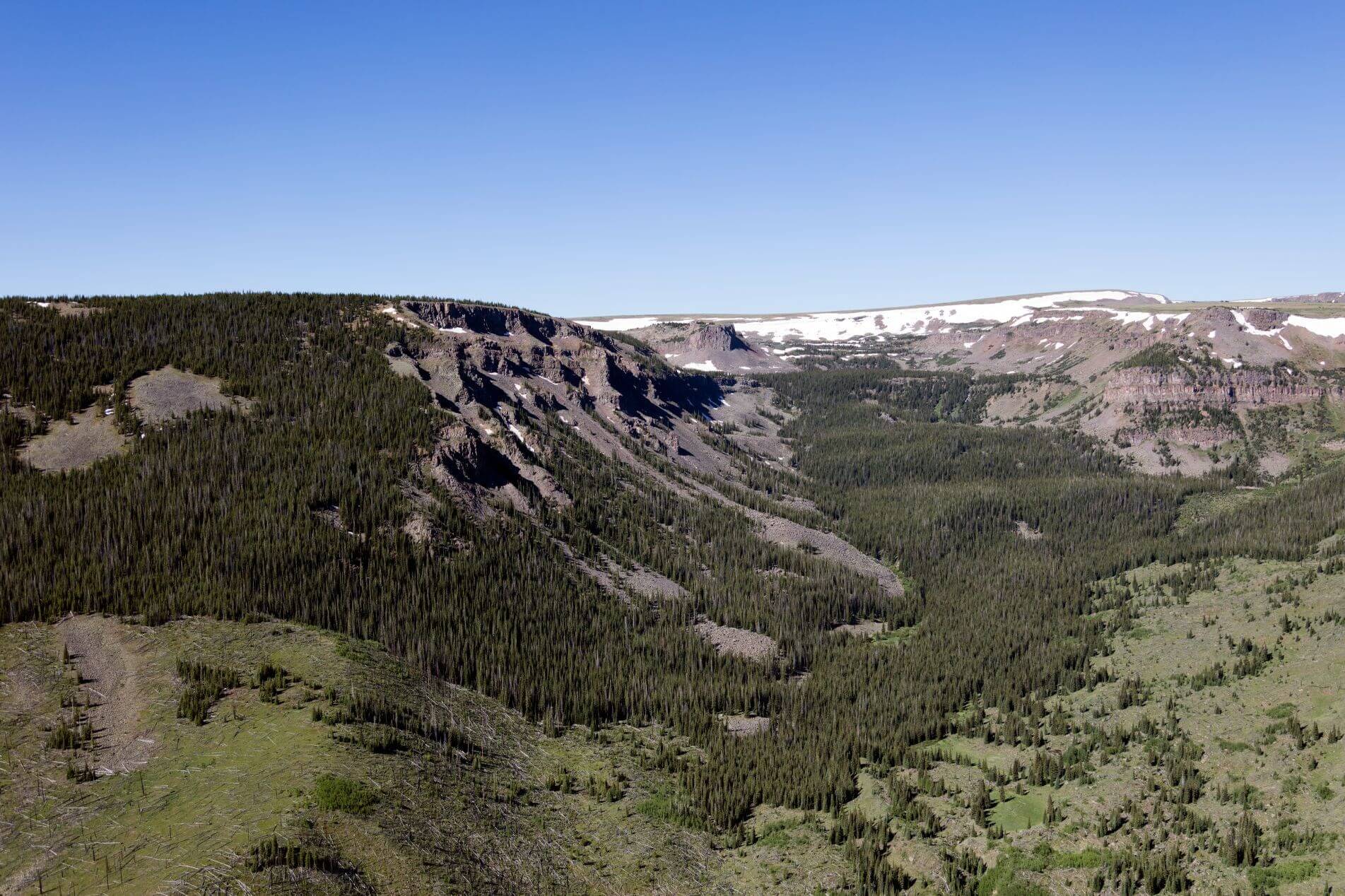
Conservation groups filed a lawsuit today challenging the federal government’s practice of authorizing predator killing inside federally designated Wilderness Areas across multiple states within the Tenth Circuit including protected public lands across Colorado.
The case targets targets a nationwide program run by the U.S. Department of Agriculture’s Wildlife Services that conducts federally-subsidized “predator control” across millions of acres of public lands at the behest of the private livestock industry.
The groups argue the federal government has unlawfully prioritized commercial livestock interests over the Wilderness Act’s requirement that these areas remain “untrammeled” by human manipulation. The case also raises broader questions about how federal agencies can interpret environmental laws following the Supreme Court’s rollback of Chevron deference.
Our press release and media contacts can be found below.
Best,
Hannah Smay
Communications Manager, WildEarth Guardians
For Immediate Release: May 27, 2026
Media Contacts:
Jennifer Schwartz, Senior Staff Attorney, WildEarth Guardians, [email protected]
Cyndi Tuell, Arizona and New Mexico Director, Western Watersheds Project, [email protected]g, 520-272-2454
Daniel Brister, Staff Attorney, Wilderness Watch, [email protected], 406-542-2048 ext. 6
New lawsuit challenges wildlife killing by federal agents inside America’s designated Wilderness Areas
USDA’s Wildlife Services authorizes federally-subsidized “predator control” across millions of acres of public lands nationwide
SANTA FE, N.M.— WildEarth Guardians, Western Watersheds Project (“WWP”), and Wilderness Watch filed a lawsuit today challenging the U.S. government’s policy of allowing federal agents to kill native wildlife, including wolves, bears, mountain lions and coyotes using poisons, traps, and aerial gunning inside the nation’s most protected public lands– congressionally designated Wilderness Areas.
The lawsuit, filed in the U.S. District Court for the District of New Mexico, targets a nationwide program run by the U.S. Department of Agriculture’s Wildlife Services that authorizes federally-subsidized “predator control” across millions of acres of public lands at the behest of the private livestock industry, including within designated Wilderness Areas subject to the strict protections of the 1964 Wilderness Act.
Today there are 803 federally designated Wilderness Areas in the United States, covering nearly 112 million acres, which still only represents less than 5% of the country.
Congress established Wilderness Areas under the Wilderness Act to preserve places “untrammeled by man,” where unrestrained wildlife and natural ecological processes operate freely without direct human control. Yet the U.S. Forest Service and Bureau of Land Management are systematically authorizing the killing of native wildlife in Wilderness Areas at the request of the heavily subsidized commercial livestock industry grazing on America’s public lands.
“This case is about whether Wilderness can actually be wild,” said Jennifer Schwartz, senior staff attorney with WildEarth Guardians. “You cannot preserve areas as ‘untrammeled’ while simultaneously deploying federal agents to kill apex predators for the intended purpose of propping up commercial grazing operations.”
The Wilderness Act broadly prohibits all commercial enterprise in Wilderness unless explicitly authorized in the Act. The Act carved out a narrow exception for “the grazing of livestock” to continue where that use predates Wilderness designation. It does not, however, authorize killing native wildlife to prevent domestic sheep or cattle from being predated upon while grazing within these remote and often rugged areas, as federal agencies have implicitly read into the statute.
The case comes as federal courts reassess the deference owed to federal agencies’ statutory interpretations following the U.S. Supreme Court’s rollback of the Chevron doctrine, which had previously required courts to defer to an agency’s interpretation of a law when silent or ambiguous as to the legal question presented.
“In this case, now that the Supreme Court overruled that doctrine, we think we stand a better chance of getting a proper judicial reading of the law based on its plain language rather than the court deferring to the agencies’ misreading of the statute,” said Schwartz.
“Here there is no ambiguity in the statute,” said Cyndi Tuell, Arizona/New Mexico Director for WWP. “Courts have already recognized that Congress spoke clearly to ban all forms of commerce in Wilderness except as specifically provided for in the Wilderness Act’s text, and it certainly did not provide for so-called ‘predator control.’ Wildlife killing is contrary to the Wilderness Act’s core purpose of preserving our wildest natural areas.”
“Killing native species to appease the livestock industry violates the Wilderness Act,” said Dan Brister of Wilderness Watch. “In Wilderness, Congress mandated that the Forest Service protect nature—not industry profits.”
The lawsuit asks the court to establish that the Wilderness Act prohibits “predator control” for commercial grazing operations in designated Wilderness, vacate the federal policies authorizing these activities, and permanently prohibit such practices going forward.

News from the horse industry. Sharing today’s information as it happens. The Colorado Horse Source is not responsible for the content of 3rd party submissions.