
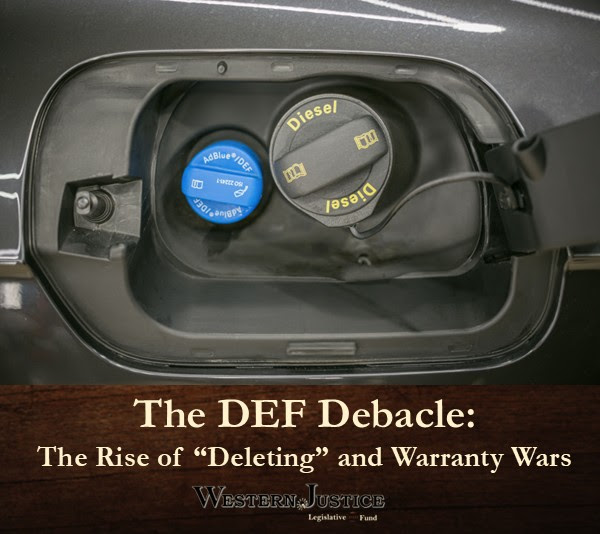
Diesel Exhaust Fluid (DEF) requirements, imposed under EPA emissions standards since around 2010, were supposed to deliver cleaner air through Selective Catalytic Reduction (SCR) systems. In reality, they have created a cascade of failures—faulty sensors, sudden derates, shutdowns, and skyrocketing maintenance—that plague farmers, ranchers, truckers, and equipment operators. These headaches don’t stay isolated. They drive up operational costs that trickle down to consumers through higher freight rates, and in turn, higher prices on food and other everyday goods. Yet when vehicle and equipment owners turn to “deleting” these problematic systems for reliability, manufacturers often respond by voiding entire vehicle warranties. This imbalance demands reform, especially as manufacturers are exploring less DEF-dependent designs.
Adding insult to injury, government and military vehicles have long operated with exemptions or different standards that often do not require the same DEF/SCR mandates imposed on civilians. If public-sector and defense fleets can function effectively without them, why force the burden onto private agriculture operations, truckers, and families who rely on diesel-powered equipment for their livelihoods?
The High Cost of Mandated DEF—and Why People Delete
DEF systems require precise urea solution to neutralize NOx, but real-world issues like sensor malfunctions, crystallization, freezing, and contamination frequently trigger limp modes or complete shutdowns. Farmers report combines dying mid-harvest; truckers face stranding on highways. The result: billions in annual downtime, repairs, towing, and lost productivity.
In response, many owners “delete” their vehicles: removing or bypassing DEF/SCR, DPF, and EGR hardware, then reprogramming the ECU. The benefits are immediate—restored power, better fuel economy, fewer breakdowns, and no more DEF fluid hassles. For off-road or heavy-use applications common in ranching and farming, it’s a practical fix. Yet on-road deletes remain technically illegal tampering under the Clean Air Act, often resulting in full warranty voidance, failed inspections, and potential fines.
Warranty Wars: Punishing Owners for Fixing Manufacturer Mandates
This blanket penalty is particularly egregious for expensive modern diesels. If you invest $80,000 in a heavy-duty pickup, deleting the emissions system to restore reliability should not void the warranty on the entire vehicle—only on the modified emissions components. Powertrain, transmission, suspension, and other systems unrelated to the DEF/SCR setup deserve continued coverage. Manufacturers already design vehicles with complex emissions hardware that proves unreliable in the field; owners shouldn’t lose all protections when addressing those very failures.
A Better Path Forward: Manufacturer-Enabled Options
Manufacturers could—and should—offer solutions that bridge the gap. They can develop ECU codes or tunable options that allow controlled deleting or simplified emissions modes while still limiting overall emissions output to acceptable levels. This would enable reliability improvements without full non-compliance, protect warranty integrity for core components, and reduce the underground market for risky aftermarket tunes. As some makers experiment with alternative or reduced-DEF strategies in newer designs, a flexible framework would prevent older compliant vehicles from losing excessive resale value due to rigid rules.
Time for Pragmatism: Prioritizing Reliability Without Full Punishment
DEF mandates have imposed real, measurable difficulties: downtime during critical seasons, safety risks from sudden power loss, and consumer-level price increases as costs cascade through the economy. Recent EPA actions—extending derate windows and dropping faulty sensor requirements—are welcome but insufficient. True reform means recognizing that “deleting” for reliability shouldn’t erase entire warranties, especially when government/military precedents show viable alternatives exist.
Rural America, trucking, and consumers deserve equipment that works reliably without punitive overreach. Manufacturers adapting to market needs through limited-delete codes or emissions-flex options would be a common-sense step. It’s past time to move beyond one-size-fits-all mandates that punish the very owners keeping the country running. Warranty protections should safeguard the vehicle, not the flawed emissions add-ons forced upon it.
Western Justice Legislative Fund Email Address: [email protected]
Western Justice Legislative Fund is a Non-Profit, 501(c)(4) Organization
Internal Revenue Code: EIN # 85-1738984 Registered in Wyoming.
Mailing address ~ P.O. Box 454 Hermiston, OR 97838
Disclaimer: Contributions to WJLF are not deductible as charitable contributions for federal income tax purposes. They may be deductible as trade or business expenses if ordinary and necessary in the conduct of the taxpayer’s business. Please consult with your tax adviser.

News from the horse industry. Sharing today’s information as it happens. The Colorado Horse Source is not responsible for the content of 3rd party submissions.