
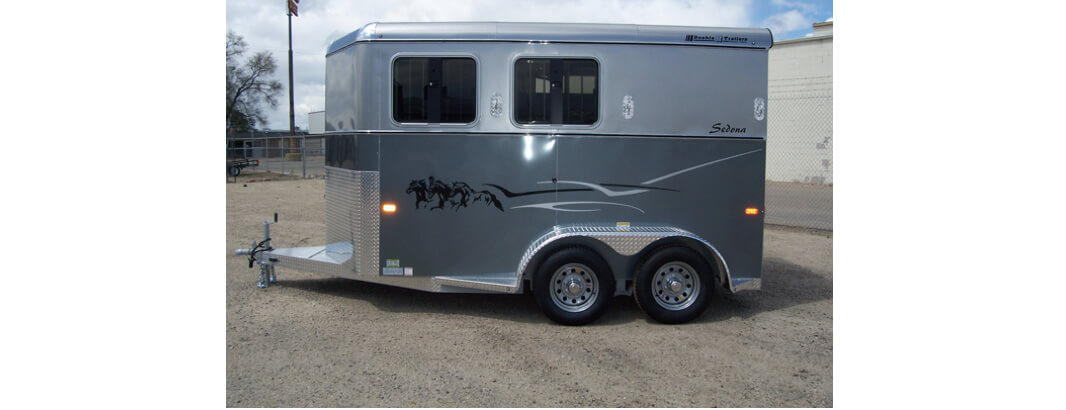
Most horse owners pay attention to their trailer tires. We notice tread wear, check air pressure, and worry about blowouts before a long haul.
But hidden behind those wheels are some of the most important—and most overlooked—parts of the entire trailer.
Wheel bearings may not be exciting, but when they fail, the results can be expensive, inconvenient, and potentially dangerous. A trailer can’t safely get down the road without them.
The Hardworking Parts You Never See
Wheel bearings allow your trailer wheels to spin smoothly around the axle with minimal friction.
Like any moving component, they rely on proper lubrication to function correctly. When lubrication breaks down or maintenance gets skipped, heat begins to build. That heat can damage bearings, spindles, axles, brakes, and other components that are far more expensive to replace.
The tricky part is that bearing problems often develop quietly.
Many horse owners don’t realize something is wrong until they notice excessive heat, unusual tire wear, strange noises, or worse, a roadside breakdown.
Maintenance Matters More Than Most People Realize
One thing I’ve learned from experienced trailer owners is that simply adding grease isn’t the same as servicing wheel bearings.
Proper maintenance means the bearings are removed, cleaned, inspected, and repacked as needed. Worn or damaged components should be replaced before they cause larger problems.
Unfortunately, trailers often sit for long periods between trips. During those months of inactivity, lubricants can settle, leaving portions of the bearings less protected when the trailer finally heads back onto the road.
That’s one reason regular use can actually be beneficial.
Even a short monthly drive helps keep components moving and operating as intended.
Watch for Early Warning Signs
The good news is that wheel bearings often give clues before a major failure occurs.
A few things worth checking include:
- Excessive wheel movement or looseness
- Unusual noises around the wheel hubs
- Uneven tire wear
- Grease leaking around the wheel area
- Excessive heat after towing
After a trip, carefully checking wheel temperatures can sometimes reveal developing issues before they become serious.
If one wheel feels significantly hotter than the others, it’s worth investigating.
Used Trailer Buyers Should Pay Attention
When shopping for a used horse trailer, wheel bearings and axle components deserve a close look.
A trailer may appear clean and well cared for on the surface while hiding expensive maintenance issues underneath. Asking questions about bearing service history can reveal a lot about how well the trailer has been maintained overall.
Sometimes what you can’t see is more important than what you can.
Small Habits Protect Your Investment
Horse trailers work hard for us. They haul precious cargo over highways, mountain passes, gravel roads, and plenty of potholes along the way.
A little preventative maintenance goes a long way toward keeping them safe and reliable.
And while wheel bearings may not be the first thing horse owners think about before a ride, they’re one of the biggest reasons we make it there—and back home again—without incident.
Leigh Goodison Grieve is a freelance writer and editor, whose work has appeared in Western Horseman and Northwest Family Magazine among others. She is also co-owner of Horse Trailer Restoration, LLC, located in Battle Ground, WA, where she and her partner David Bodin restore, repair and maintain horse trailers. For more information see: www.handyrider.com*
*This link was not active at the time this article was added to the website in 2019.
Published June 2011 Issue
Originally published at https://www.coloradohorsesource.com/the-secret-lives-of-horse-trailers-part-2/

The Colorado Horse Source is an independently owned and operated print and online magazine for horse owners and enthusiasts of all breeds and disciplines in Colorado and surrounding area. Our contemporary editorial columns are predominantly written by experts in the region, covering the care, training, keeping and enjoyment of horses, with an eye to the specific concerns in our region.